Introduction
In July 2026, Thailand announced its ambition to accelerate Net Zero from 2065 to 2050 — a change that sounds promising but conceals enormous complexity.
This is not merely an environmental issue. It is a global economic competition in which countries and businesses that adapt slowly will permanently lose trade opportunities, investment, and competitive standing.
Thailand's Acceleration Toward Net Zero 2050
The Thai government has elevated its Nationally Determined Contribution (NDC) to a 40% reduction from BAU by 2030, and set a Carbon Neutrality target for 2050 — fifteen years ahead of schedule.
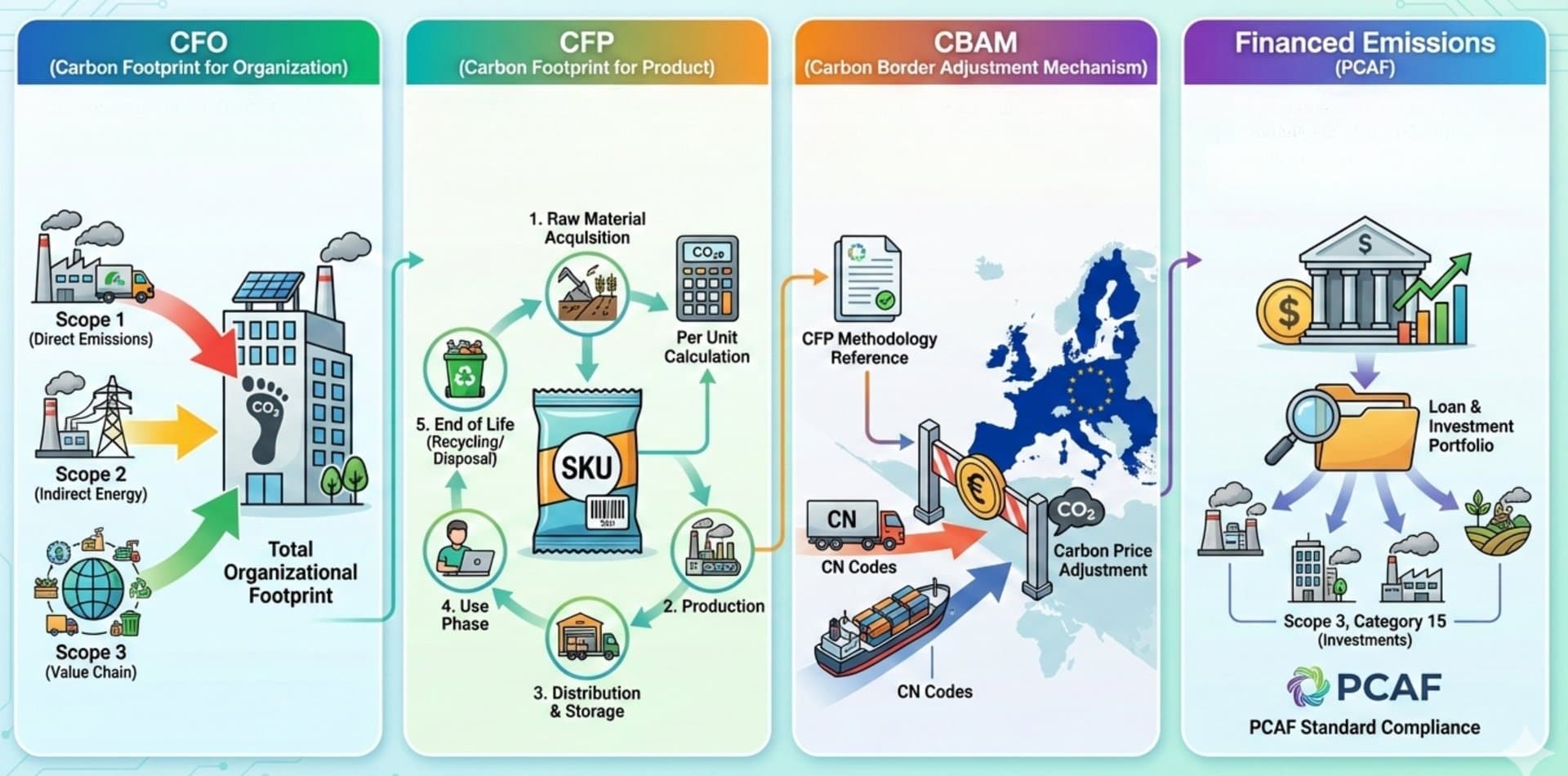
This shift is driven not only by internal pressure, but by the EU CBAM expanding to additional industrial products, ESG supply chain demands from multinational companies, and fierce competition to attract Green FDI across ASEAN.
3 Major Hurdles on Thailand's Net Zero Journey
In-Depth Analysis by Greenopia • July 2026
- Thailand's Net Zero policy lacks accessible investment mechanisms for SMEs
- Thai green loans cover only ~0.3% of GDP vs. EU at >3%
- SMEs represent 35% of GDP but almost no Carbon Accounting Tools exist for them
- International Climate Finance rarely reaches Thai SMEs directly
Impact: SMEs that don't adapt risk De-listing from international Supply Chains
- Military carbon emissions are exempt from NDC reporting under the Paris Agreement
- Geopolitical tensions are forcing defense budget increases, compounding carbon budgets
- Thailand faces pressure to attract FDI from high-carbon-risk regions
- Parts of international supply chains are tied to carbon-intensive industries
Impact: Gaps in carbon accounting make true Net Zero targets further than figures suggest
- World Bank places Thailand in the Top 20 most physically climate-vulnerable nations
- Floods and droughts threaten agriculture and factories — core FDI foundations
- ESG investors increasingly assess Climate Risk before committing to Thailand
- Becoming a Low-Carbon Hub is an opportunity to attract hundreds of billions in Green FDI
Opportunity: Fast-moving Thailand can capture Green FDI ahead of regional rivals
Decarbonization is not a CSR activity — it is a new condition for survival in global supply chains. Businesses that move first face lower costs and command market premiums.
Challenge 1: The Policy Gap and SME Finance
SMEs account for over 35% of Thailand's GDP, yet still lack the fundamental tools to measure, reduce, and report carbon emissions. The core reason is that most Net Zero policies are designed for large corporations with dedicated ESG teams and budgets.
Green loans in Thailand remain a tiny fraction of GDP compared to Europe, and international Climate Finance tends to flow to large projects first — widening this gap further.
Challenge 2: Geopolitics and the Defense Carbon Budget
A factor routinely overlooked in Net Zero discourse is the carbon footprint of the global military sector — officially exempted from Paris Agreement NDC commitments.
Rising tensions in the Indo-Pacific are forcing many Asian nations to increase defense spending, indirectly crowding out budgets that could fund Climate Transition. For Thailand, trade relationships with high-carbon-intensity nations remain a long-term risk.
Challenge 3: Vulnerability #17 and the FDI Opportunity
The World Bank ranks Thailand in the Top 20 nations most physically vulnerable to climate risk — including floods, droughts, and heatwaves — all of which directly threaten the manufacturing base that underpins FDI.
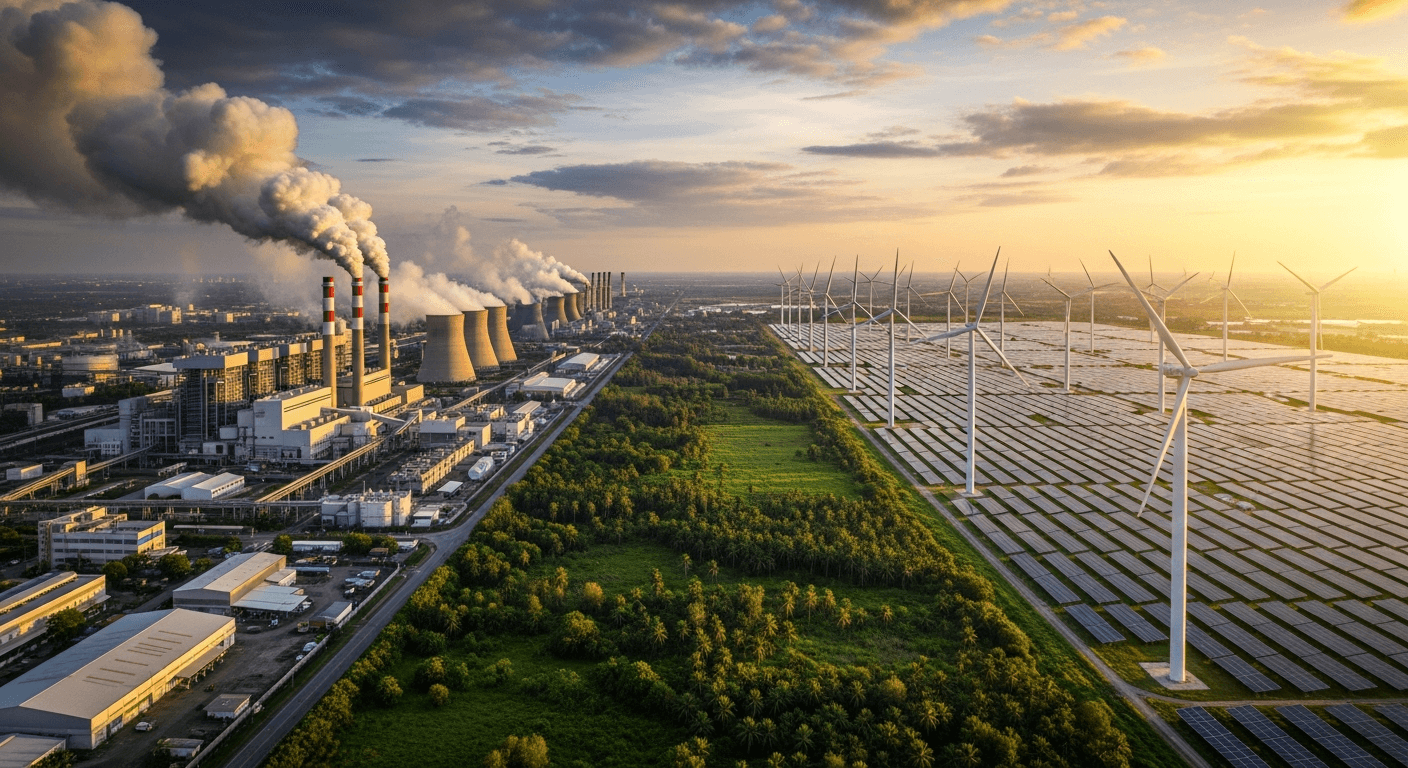
But within this risk lies a critical opportunity: nations that adapt quickly and build robust Low-Carbon infrastructure will attract Green FDI from multinationals seeking Carbon-Compliant Production Bases in the region.
Conclusion: Survival, Not Just PR
For Thai businesses, treating Net Zero as a PR or CSR activity is dangerous.
The reality is: international customers, banks, investors, and global supply chains are imposing new conditions where Carbon Disclosure is not optional — it is mandatory. Businesses that begin measuring, reducing, and reporting carbon today will face lower adaptation costs and command market premiums that competitors who wait will never recover.
Greenopia is ready to support businesses of every size — from Carbon Footprint measurement and decarbonization planning to internationally recognized certification.