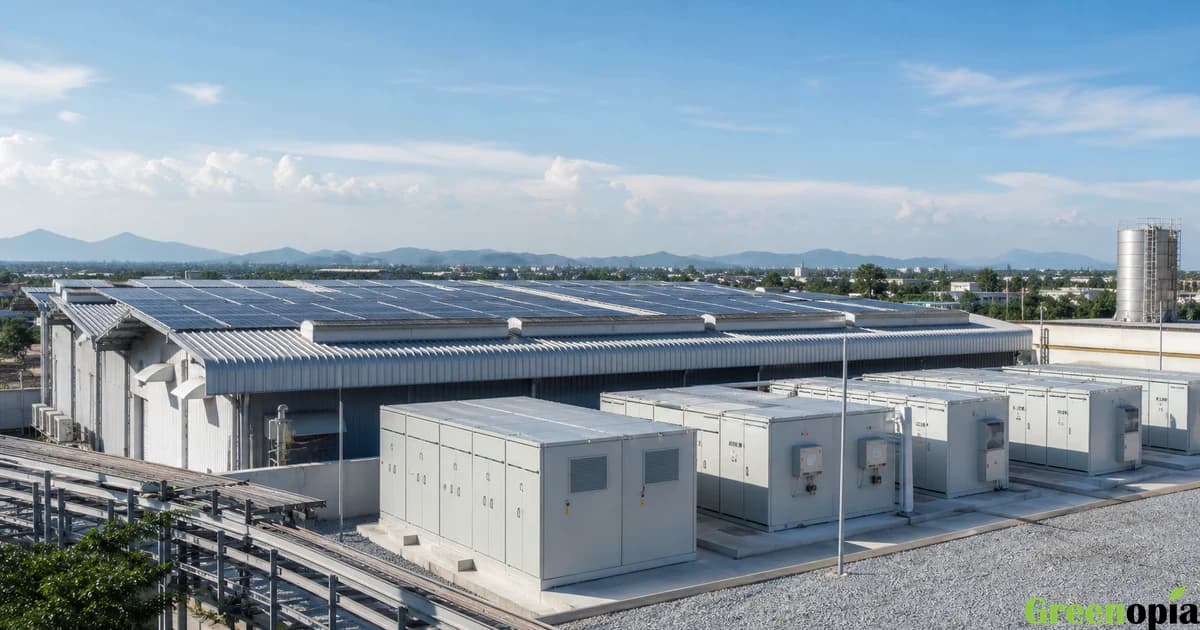
What is a Green Bond?
A green bond is a fixed-income instrument issued to raise capital for projects or assets with clear environmental benefits. It belongs to the broader ESG bond family, but its proceeds are ring-fenced for eligible green projects rather than general corporate spending.
Common examples include renewable energy, energy efficiency, clean transportation, wastewater treatment, pollution prevention, and circular-economy infrastructure.

Why does it matter?
The transition to a lower-carbon economy requires large amounts of long-term capital. Green bonds connect that capital with projects that can improve energy systems, transport networks, and environmental infrastructure.

For issuers, a green bond can broaden access to investors who care about environmental impact and strengthen accountability around the use of proceeds. The process may require additional reporting and an external review.
For investors, green bonds provide scheduled interest and principal payments under the terms of the bond, while making the intended environmental use of proceeds more visible. They still carry normal fixed-income risks, including credit, interest-rate, liquidity, and project-related risks.
What projects can green bonds support?
Green bond trends in Thailand and around the world
The global green bond market has expanded rapidly since the first issuances in 2007, with cumulative global issuance of approximately 3.3 trillion US dollars through the third quarter of 2024.
In Thailand, the Securities and Exchange Commission introduced green bond offering rules in 2018. Cumulative issuance has exceeded 85.3 billion baht from 11 leading companies, with the energy sector representing more than half of the total.
Examples mentioned in the source include BTS Group, RATCH, GPSC, EXIM Bank, and CIMB Thai, which have used green or sustainability-linked financing for clean transport, renewable energy, waste management, and lending to environmental projects.
How can investors access green bonds?
Investors may access green bonds through two main channels, subject to the conditions of each issuance:
What should investors check first?
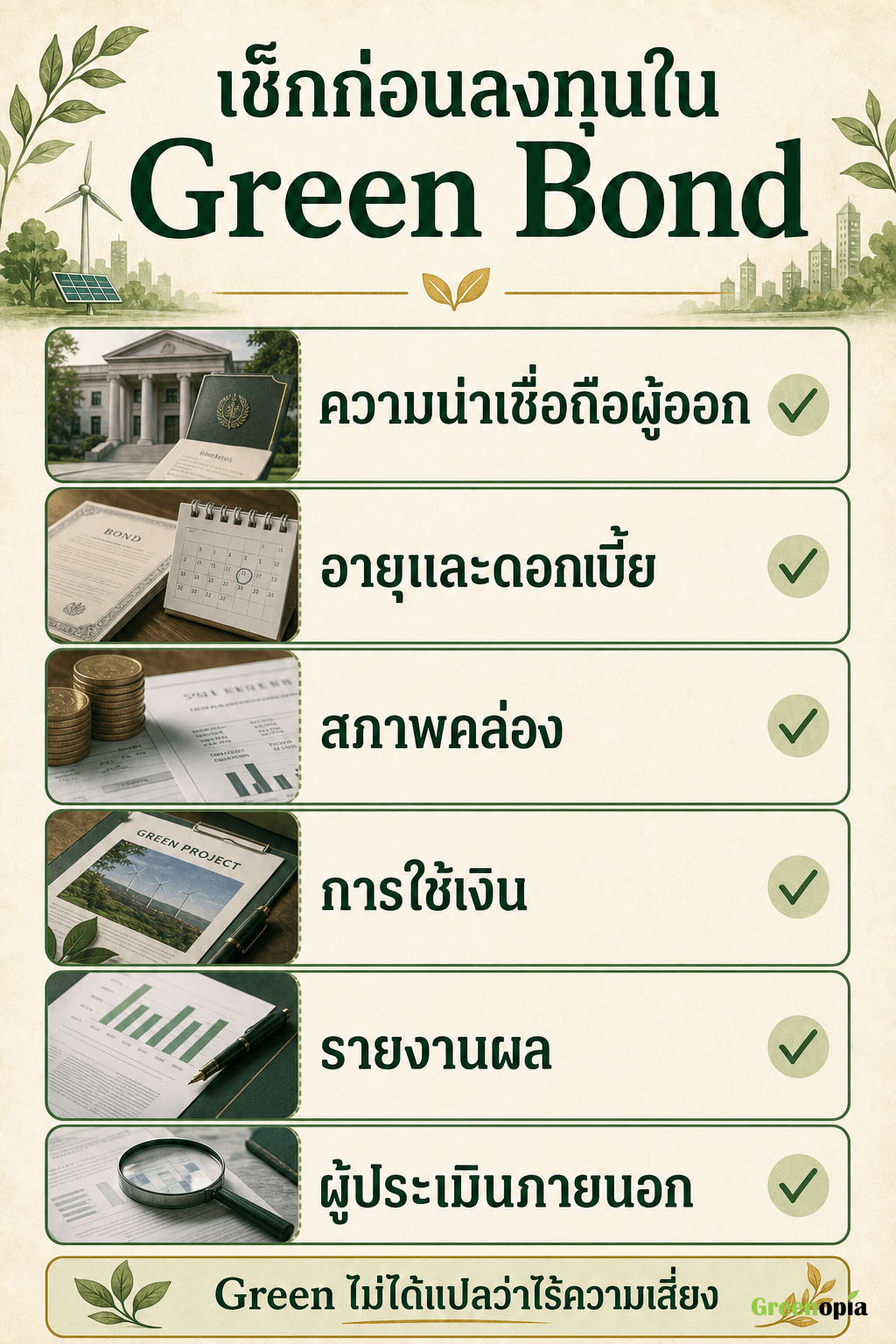
Green does not mean risk-free. Before investing, review the issuer's credit quality, maturity, interest rate, liquidity, minimum investment, fees, use-of-proceeds framework, reporting, and any external review. Compare the bond's risk and return with other fixed-income options and make sure the investment fits your own objectives.
The key takeaway
Green bonds are a practical bridge between financial markets and environmental action. Their value comes from both sides: investors receive a defined fixed-income instrument, while issuers direct capital toward projects that can support a more resilient and sustainable economy.
*Source: adapted from the supplied article by Kamolchanok Teekakul, Thansettakij.*